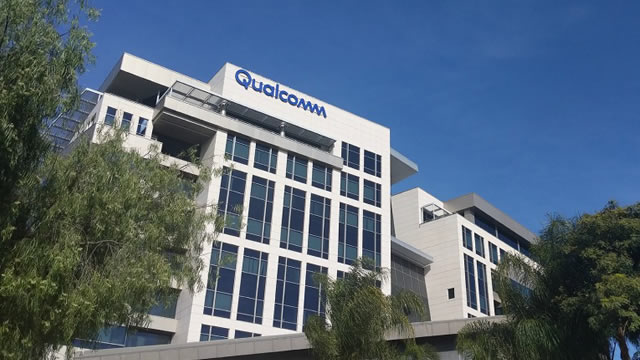
How Qualcomm Stock Rises To $184
QCOM • NASDAQ
Unlock comprehensive alternative data signals to make better investment decisions

Track website visits, page views, unique visitors, and engagement metrics over time to gauge online interest and brand strength.

Monitor Twitter follower growth, engagement rates, and social media presence to understand brand reach and community sentiment.

Analyze TikTok follower trends and viral content performance to measure youth demographic appeal and cultural relevance.

Track Facebook page likes, comments, shares, and post engagement to assess community interaction and brand loyalty.

Monitor Instagram follower growth, engagement rates, and visual content performance across demographics.

Track YouTube channel growth, video views, and subscriber engagement to measure content marketing effectiveness.

Monitor LinkedIn company page followers and professional network growth to assess B2B brand strength and talent attraction.

Track open job positions and hiring trends as a leading indicator of company expansion, contraction, or strategic shifts.

Monitor employee headcount changes on LinkedIn to gauge organizational growth, restructuring, or cost-cutting measures.

Analyze sentiment scores from Reddit discussions to understand retail investor mood and potential price momentum.

Track daily news mentions across major publications to measure media attention, PR effectiveness, and market awareness.

View key financial metrics including Revenue, Net Income, EPS, Free Cash Flow, EBITDA, and Total Assets. Access 2-year quarterly charts for Revenue & Income and Free Cash Flow trends.

Analyze technical indicators including 50-day Simple Moving Average (SMA) with price overlay and Relative Strength Index (RSI) charts.
TrendEdge provides tools and data for research and educational purposes only and does not provide investment advice or personal recommendations.
You don't hold QCOM in your mock portfolio yet.
With a PE ratio of 27.92 and EPS of 4.96, QUALCOMM is priced at a moderate premium to its current earnings, suggesting the market is embedding expectations of continued growth but not extreme optimism. The valuation is not distressed, but the multiple implies investors are paying up for future earnings stability and expansion in key segments like 5G, automotive, and IoT. Overall, the financial profile appears solid but not obviously mispriced in either direction based on the limited data provided.
The stock is trading at $138.47, about 14.2% lower over the last month and notably below its 200-day moving average of $160.82, signaling a negative intermediate-term trend. An RSI of 39.97 shows the stock is in weak momentum territory but not yet oversold, implying selling pressure remains but capitulation may not have fully played out. Overall, technicals lean bearish in the near term, with the price action suggesting caution until the trend stabilizes or reverses.
Alternative data for QUALCOMM show constructive signals: web traffic is robust at an estimated 3.49 million monthly visitors, and job openings have doubled month over month to 2,000, indicating aggressive hiring and potential investment in future growth. Social media followings across Instagram, Facebook, and LinkedIn are all growing modestly, with LinkedIn up 1.9%, suggesting ongoing brand relevance and talent-market engagement. These indicators point to a company that is investing, expanding, and maintaining strong digital presence despite recent stock price weakness.
QUALCOMM’s fundamentals and alternative data appear constructive, but the stock’s recent price action and technical profile are clearly weak, creating a mixed picture. The company looks financially sound with a reasonable valuation and strong hiring and engagement signals, yet the market is currently discounting the shares, as seen in the sharp recent decline and sub-200-day trading. Overall, the setup leans neutral: underlying business indicators are supportive, but confirmation from price and momentum is still lacking.
Our AI Score rates companies on a scale from 0 to 10, based on alternative data points such as web traffic, app downloads, and job postings — combined with financial health indicators and technical signals.
Key moves vs recent baseline (last day / last week)
Plain-English summary of the biggest drivers (informational)
Potential risk factors to review
Based on earnings timing, volatility, liquidity and crowd activity. Informational signals only — not investment advice.
Reassess your thesis if any of these occur: