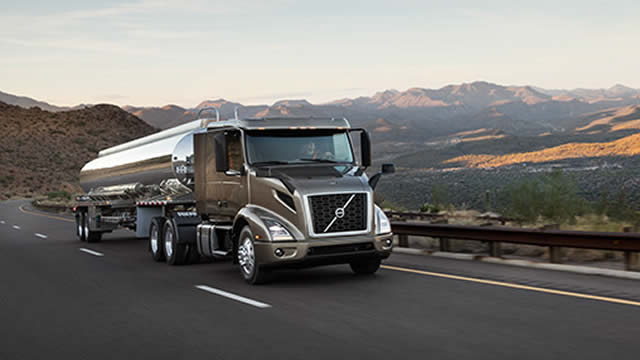
Paccar (PCAR) is trading at $129.94 on the NASDAQ, reflecting a modest 0.8% pullback in the latest session with a market capitalization of $68.4 billion. Volume came in at approximately 1.66 million shares, suggesting steady institutional engagement. As one of the most globally diversified commercial truck manufacturers — operating under the Kenworth, Peterbilt, and DAF brands across North America, Europe, South America, and Australia — Paccar's scale and multi-segment structure provide a degree of revenue resilience that distinguishes it from more narrowly focused heavy-equipment peers.
TrendEdge's AI model assigns PCAR a score of 7 out of 10, reflecting a constructive but not euphoric outlook. This score factors in Paccar's diversified revenue streams across its Truck, Parts, and Financial Services segments. The Parts and Financial Services divisions are particularly significant — they tend to generate more stable, recurring income that buffers against the cyclical nature of new truck orders. A score in the 7 range typically signals that momentum indicators and fundamental quality are aligned, but that there are limiting factors — likely macro freight cycle headwinds — keeping it below a strong-buy threshold.
Looking ahead, investors should monitor freight demand trends and fleet replacement cycles, which are primary drivers of Paccar's Truck segment volumes. The ongoing transition to alternative powertrains — including Paccar's investments in battery-electric and hydrogen trucks — represents both a capital allocation risk and a long-term competitive catalyst. Interest rate sensitivity within the Financial Services segment is another key variable. Any softening in commercial lending conditions or trucking demand could pressure margins, making freight market data and Class 8 truck order rates critical indicators to track through 2026.